
Case Studies
One link per job: how a Melbourne installation company killed double entry
Quick answer
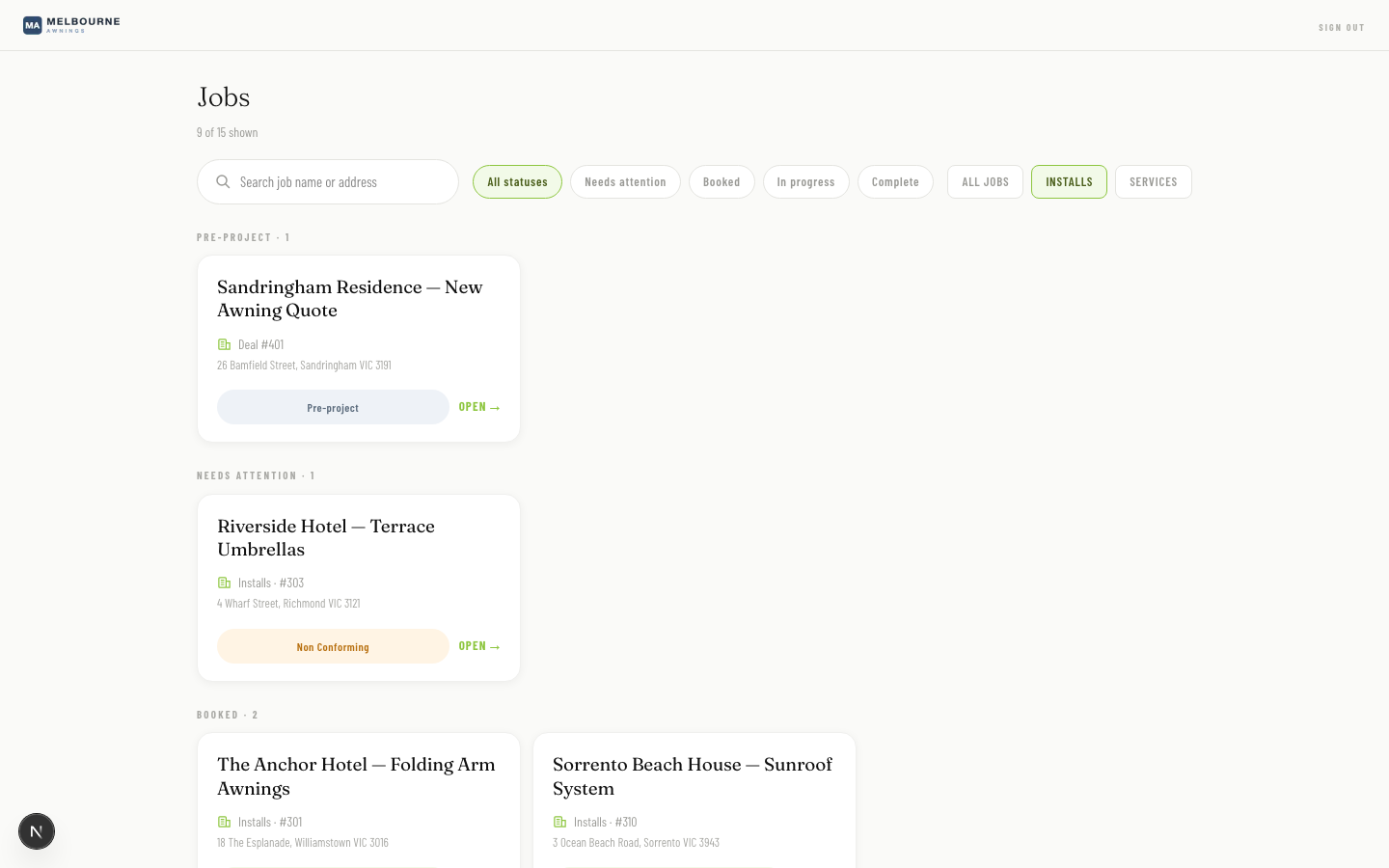
A Melbourne installation company was losing time to double entry and to the office chasing the field for job updates. We built a single custom tool: the installer opens one link on their phone per job, and everything — site details, an on-site checklist, a check-measure form that generates a versioned PDF, sign-off and the outcome — writes straight back to their CRM. No paper, no re-typing, and the office can see where every job is up to without ringing anyone.
The problem: one job lived in five places at once
Like most businesses that install or service things on site, this one ran on a mix of paper job sheets, photos on someone's phone, a job-management app and a tangle of automations holding it together. The information a single job needed — the address, what was measured, what was signed off — ended up spread across all of them, and none of them agreed.
The real cost was the handoff. A job was sold in the office, then someone had to make sure the installer had the details; the installer did the work, then someone had to re-type what happened back into the system for invoicing. Between those steps, the office spent its day as a switchboard — where is that job up to, did the check-measure come back, has it been signed off?
What we built: one link per job
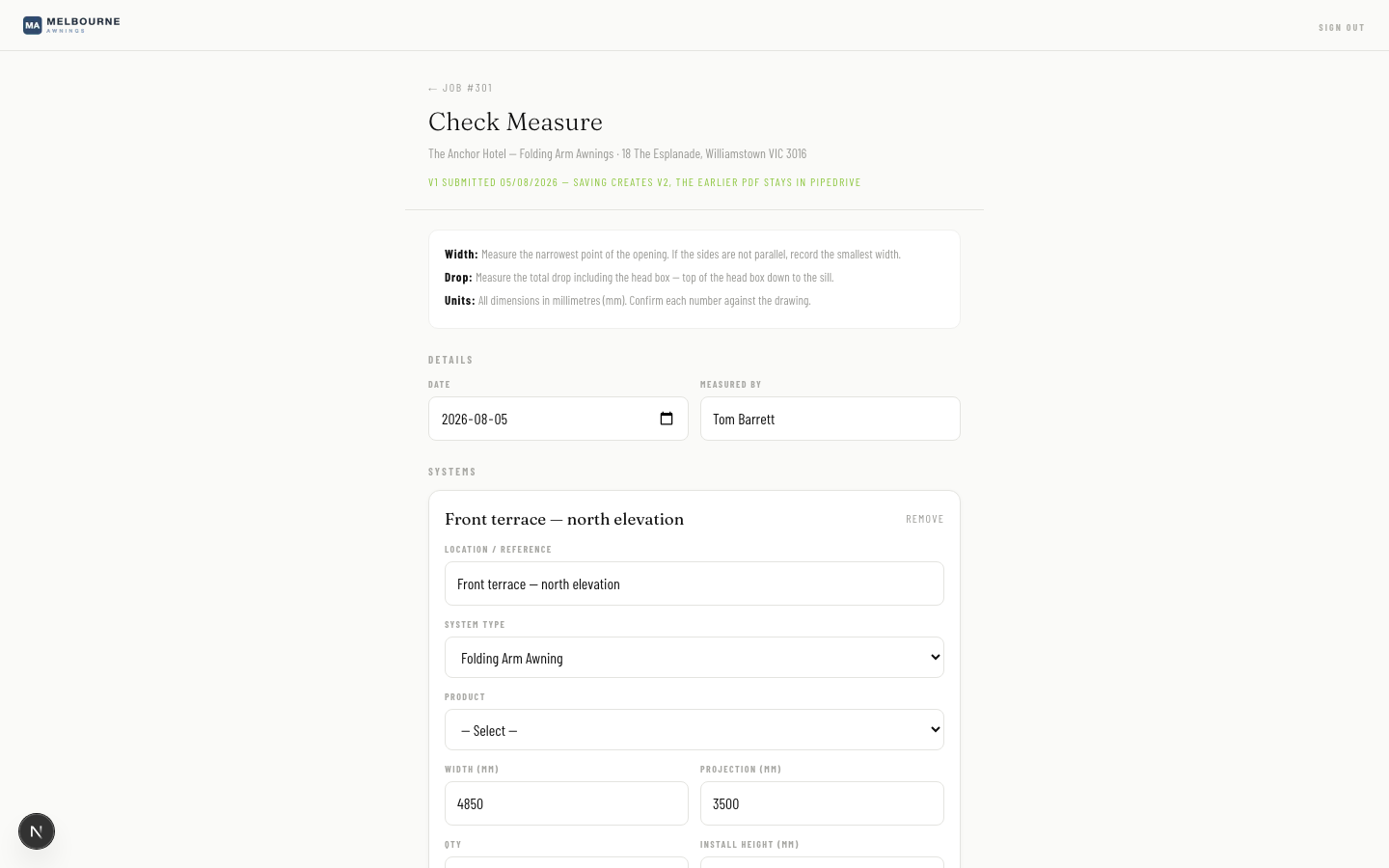
Instead of another app to learn, we built one custom tool shaped around exactly how they already worked. The installer opens a single link on their phone for the job in front of them. Everything they need is on that one screen, and everything they do flows back automatically.
- Job details and site address, with tap-to-call the client — no digging through messages.
- An on-site checklist, ticked off as the work happens rather than from memory that evening.
- A check-measure form that generates a versioned PDF, so there is never an argument later about which measurements were current.
- Sign-off and a clear outcome — complete, or non-conforming with the reason captured.
- Every bit of it writes back to their CRM automatically, so nothing is re-keyed in the office.
The result: the office stopped chasing the field
Once the job updates itself, the switchboard goes quiet. The office can see where any job is up to without making a call, the field team carries one link instead of a folder, and the double entry that used to sit between done-on-site and ready-to-invoice simply disappears.
It replaced the paper and the brittle automation glue with a single tool the business owns — built for one company, around how they already worked, not bent around someone else's template.
Why off-the-shelf could not do this
There is plenty of field-service software on the market, and it is good at the generic 80 percent. The trouble is the last 20 percent — the check-measure form that has to generate a specific document, the exact sign-off rules, the way this business's jobs actually flow — is where the friction lives, and that is the part a template makes you work around.
We did not replace the tools they already paid for. We built the missing piece between them: the on-site layer that captures the job once and feeds everything else.
Common questions
Did they have to replace their existing systems?
No. The portal writes back into the CRM they already used. We build the connective layer around your existing tools rather than forcing a migration.
How long does something like this take to build?
Tools like this are built in weeks, not the six-plus months a large agency quotes — because it is one focused tool shaped to your process, not a whole platform.
Do you own what we build?
Yes. You own the tool and the code. It is built for your business, and it is yours.