
Case Studies
Where is everyone? How a surveying company got its field crews — and its safety records — under control
Quick answer
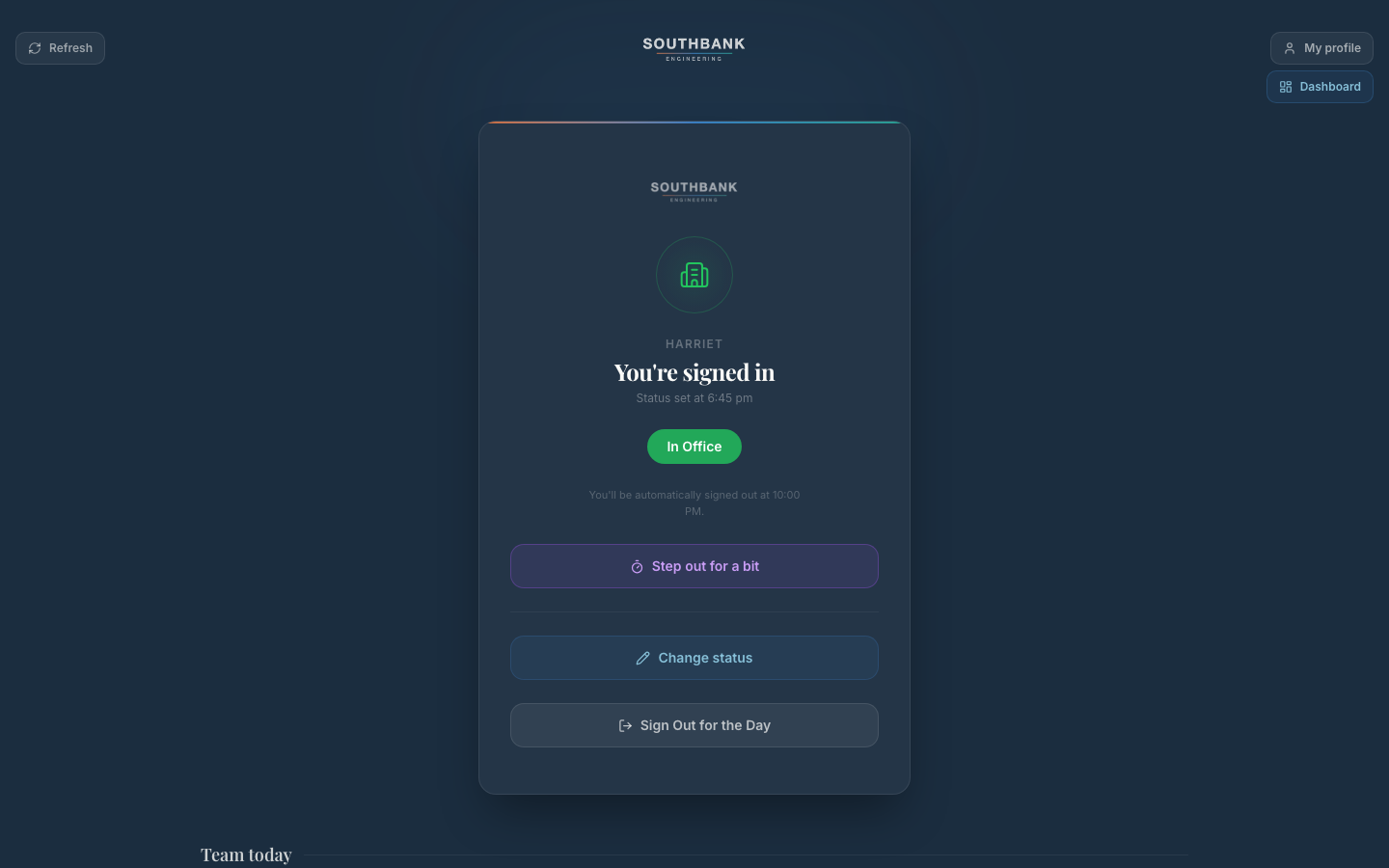
A surveying company had field crews spread across sites all day, and the honest answer to who is on a site by themselves right now was a guess. We built a staff-presence and safety portal: everyone signs in with their status, a shared board shows where the team is, and on-site check-ins capture the site, a nominated buddy and an expected return time — the buddy gets an SMS and the dashboard flags anyone overdue. Leave requests, approvals and exportable monthly reports mean the safety records exist as data, not memory.
The problem: the manager was the map
When your team works out on sites, coordination stops being about capacity and starts being about visibility. This surveying company had a good team — but the only real record of who was where lived in one manager's head and a whiteboard that was out of date by mid-morning.
Two things made that risky. First, safety: surveyors regularly work alone on remote sites, and there was no reliable way to know someone had finished and got back safely. Second, records: if anyone ever had to produce proof of how a situation was handled, the answer was a folder, a few photos and someone's memory — which is exactly the answer you do not want to give an auditor.
What we built: a live team board and lone-worker check-ins
We built a single portal the whole team uses, designed around how a field business actually runs its day.
- A daily sign-in with status — in the office, working from home, or on-site — so the picture is always current.
- A shared team board, so anyone can see where colleagues are without asking the manager.
- On-site check-in that captures the site, a nominated buddy and an expected return time.
- An automatic SMS to the buddy, and a dashboard that flags anyone who is overdue — so a lone worker is never quietly forgotten.
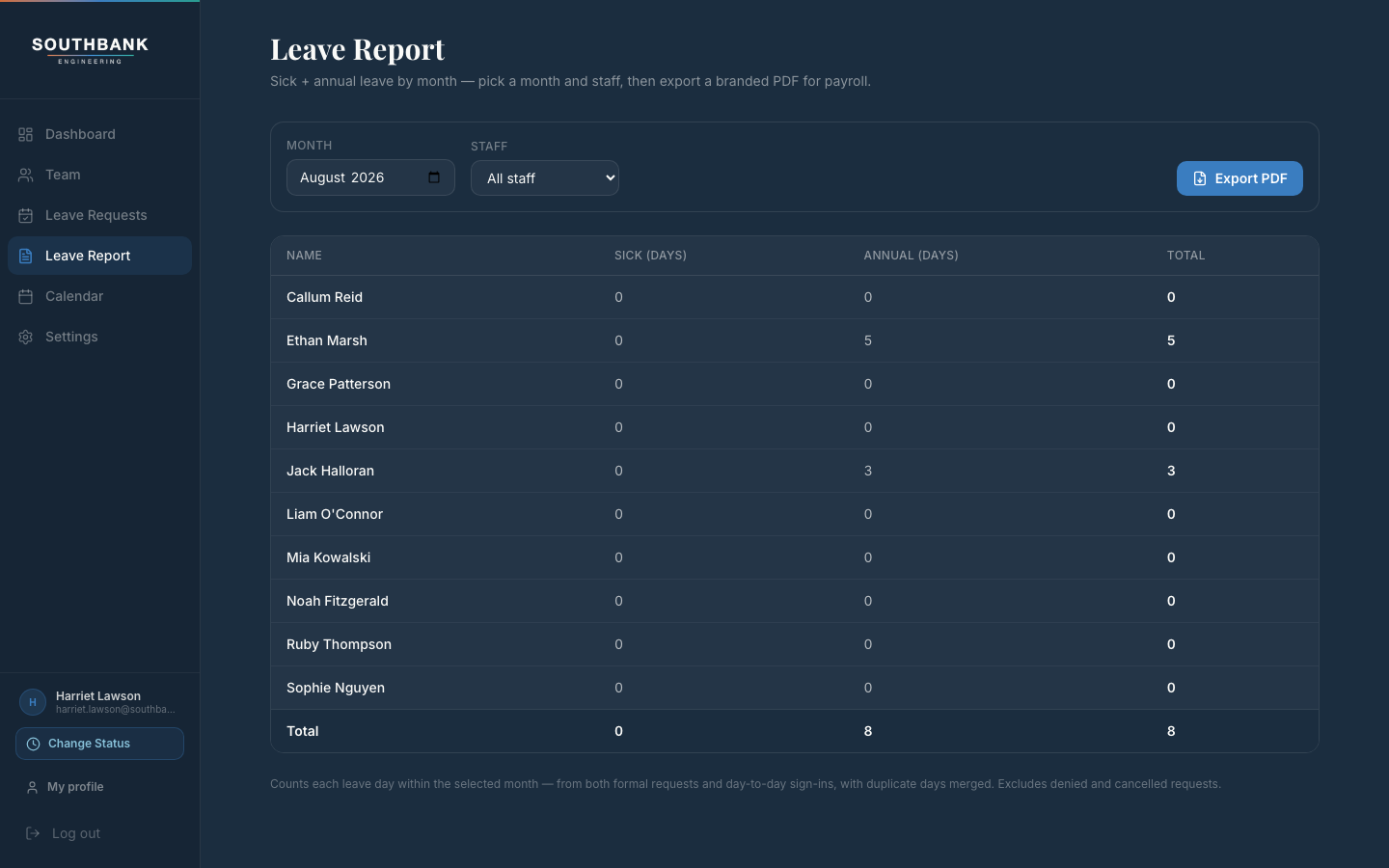
- Leave requests and approvals in the same place, and exportable monthly reports so the records are ready before anyone asks.
The result: visibility, safety and a record you can produce
The manager stopped being the single source of truth, because the system became it. Anyone can see where the team is at a glance, a lone worker who runs over time is flagged rather than forgotten, and the compliance records exist as exportable data instead of a story someone has to reconstruct.
None of this replaced how they worked — it turned the coordination that used to live in one person's head into something the whole business can rely on.
This is a coordination problem, not a headcount problem
A business this size has already solved capacity — there are people to do the work. What breaks as a field team grows is coordination: knowing where everyone is, keeping a lone worker safe, and being able to prove what happened. Those are systems problems, and they are exactly the kind of thing a tool built around your operation solves cleanly.
Common questions
How does the lone-worker check-in work?
A worker checking in on-site nominates a buddy and an expected return time. The buddy gets an SMS, and if the worker is overdue the dashboard flags it — so no one is left unaccounted for.
Is this only for surveyors?
No. The same pattern fits any business with staff out on sites — engineering, trades, inspections, field services. The portal is shaped to how your team actually works.
Can we get the records out for compliance?
Yes. Sign-ins, check-ins, leave and approvals all export as monthly reports, so the record is ready to produce rather than reconstructed after the fact.